The shores that give our jewellery its names
Byron, Snapper Rocks, Noosa, Vanikoro, Lérins, Celestún: behind the names of our pieces lie real shores, and what makes each of them singular.
3 min read
At Éclat d’océan, the name of a piece is often an address. That of a cape, a bay, an island. These names do not say where the sea glass in each piece comes from: they speak of a spirit, a light, a longing for elsewhere. Here are the shores behind some of our creations, and what makes them unique.
Byron, the easternmost cape of Australia
Byron Bay lies on the coast of New South Wales, in Australia. Its headland, Cape Byron, is the most easterly point of the Australian mainland, crowned by a white lighthouse watching over the Pacific. The town is known for its long beaches, its lush vegetation and a way of life turned towards the ocean.
The Byron earrings keep its tropical spirit: steel hoops, stylised monstera leaves and a bead of sea glass in a fresh shade.
Snapper Rocks, on the Gold Coast
A little further north, at the southern end of the Gold Coast in Queensland, Snapper Rocks is a rocky point at Coolangatta, close to the border with New South Wales. Its wave peels along the point and draws surfers from all over the world.
The Snapper rocks ring captures its sunny energy: a gold-tone band, a fragment of translucent green sea glass and a delicate leaf motif.
Noosa, where the forest meets the beach
On the Sunshine Coast, still in Queensland, Noosa is known for its national park, where the forest runs down to coves and beaches. A landscape where a few steps take you from the shade of the trees to the sand.
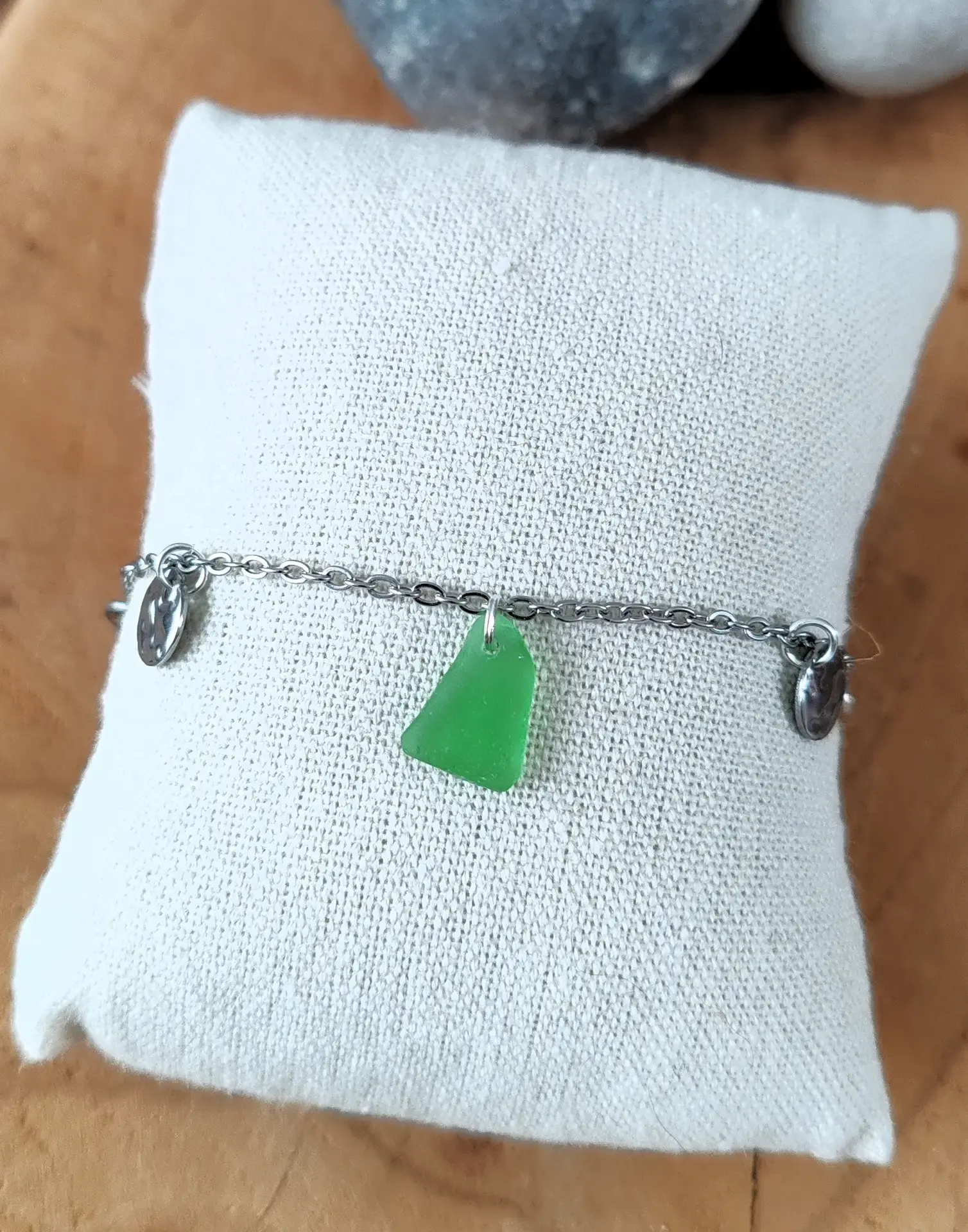
The Noosa bracelet echoes that simplicity: a green sea glass pebble on an adjustable black cord, light and easy to wear every day.
Vanikoro, the island of La Pérouse
A change of ocean, or almost. Vanikoro is an island of the Solomon Islands, in the Santa Cruz group, surrounded by a barrier reef. It was on its reefs that the two ships of the La Pérouse expedition, La Boussole and L’Astrolabe, were wrecked in 1788. The fate of the expedition remained a mystery for decades, until remains were found on the island.
The Vanikoro ring draws on these sea mysteries: a raw fragment of intense green sea glass, set on an adjustable band, like a treasure brought back by the waves.
The Lérins Islands, off Cannes
Closer to home, off Cannes, the Lérins Islands form a small Mediterranean archipelago. On Sainte-Marguerite, the Fort Royal remains famous for holding the mysterious prisoner known as the Man in the Iron Mask. On Saint-Honorat, monks still live at Lérins Abbey, among vines and pines.
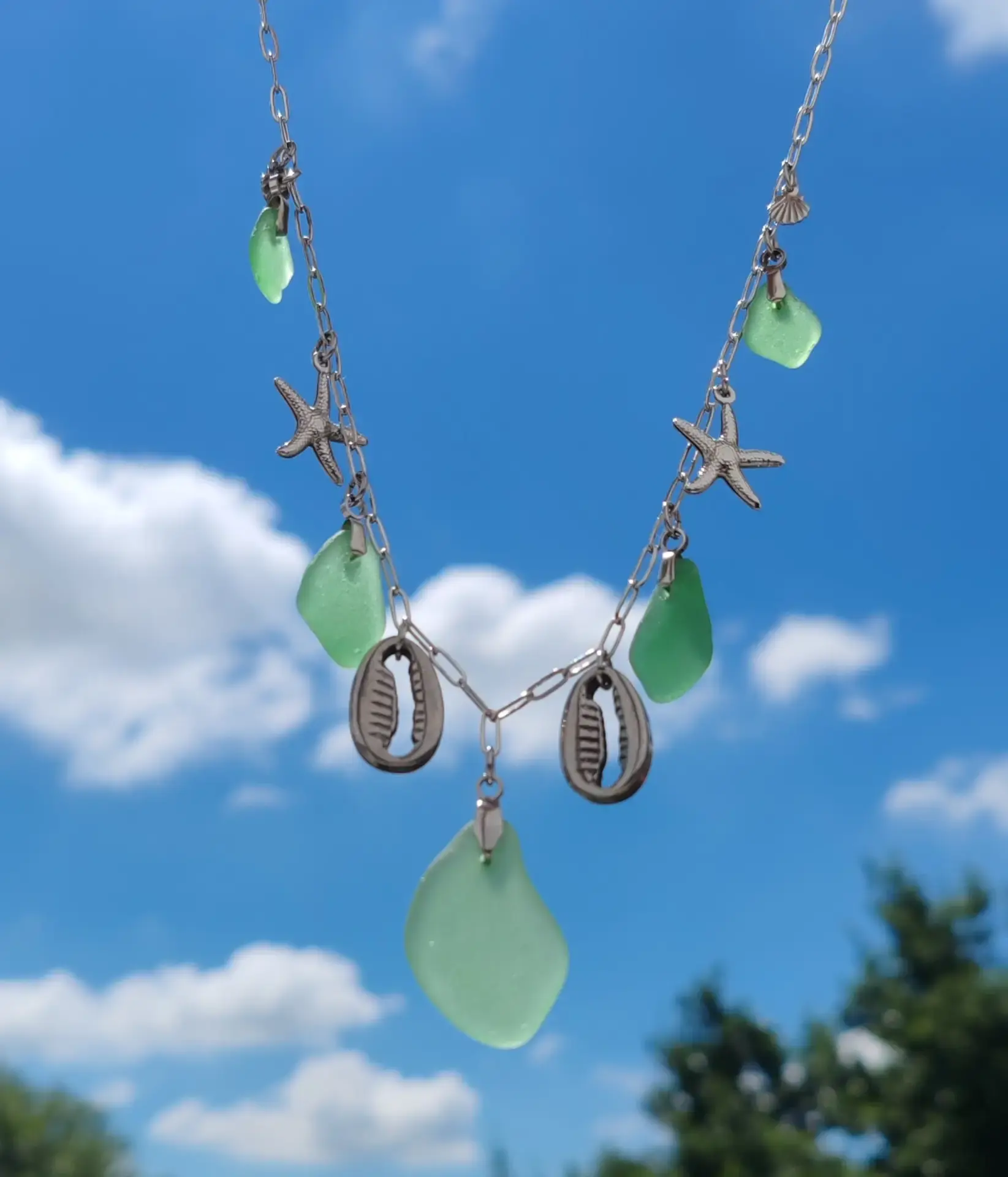
The Lérins multi-strand necklace plays on three gold-tone chains of different lengths, gathered around a unique piece of green sea glass.
Celestún, on the Gulf of Mexico
A last stop, on the west coast of the Yucatán Peninsula, in Mexico. Celestún is a fishing village set beside a ria, a lagoon protected as a biosphere reserve. People come to watch the pink flamingos that colour its shallow waters.
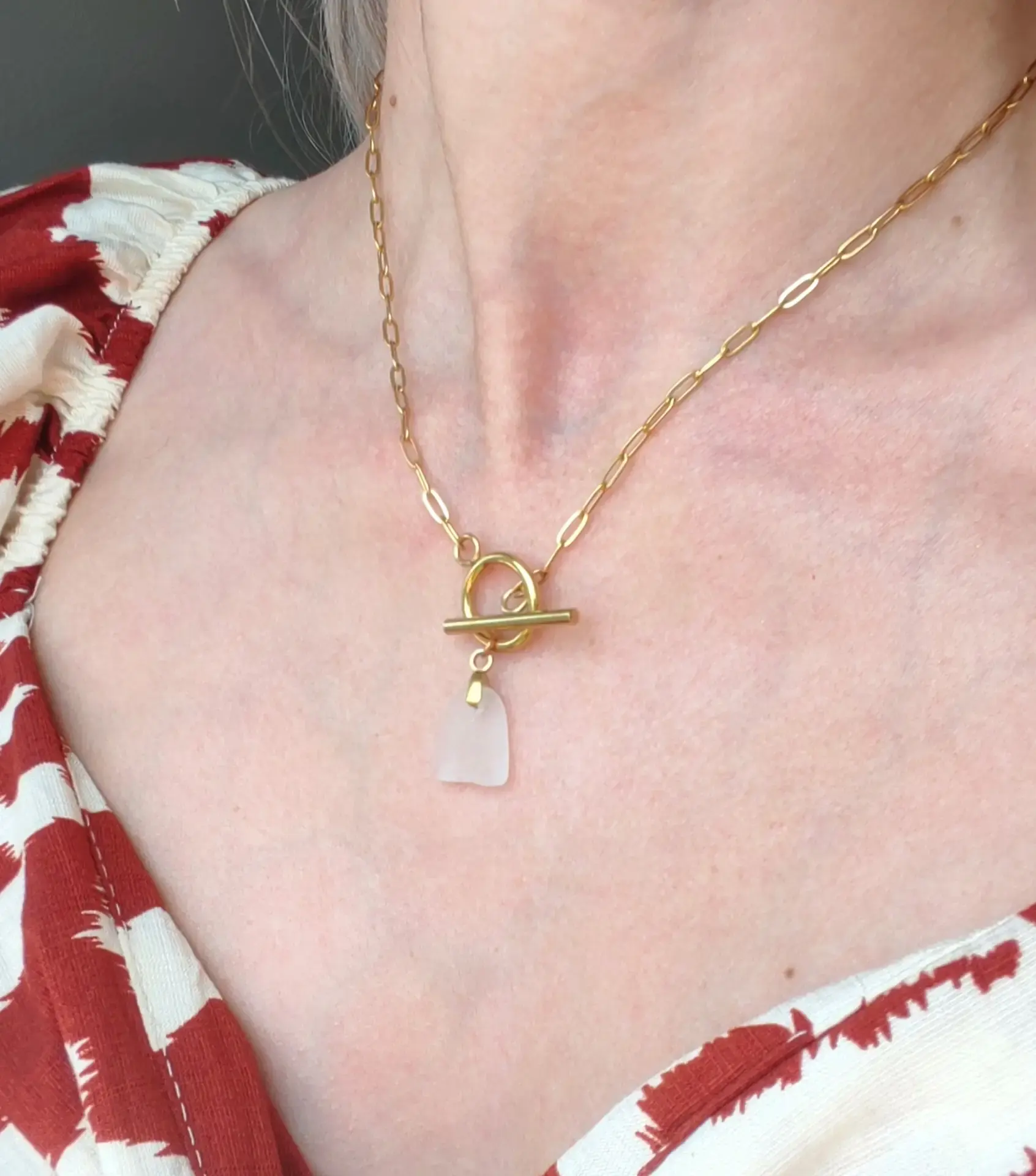
The Celestun necklace keeps its contemporary simplicity: a rectangular stainless steel chain, a toggle clasp and a drop of sea glass.
A journey to wear
From one continent to another, these shores share one thing: the sea shapes the landscape as much as the lives of those who live there. That is what we love to find in a fragment of sea glass, and what these names invite you to imagine. Each piece is a port of call, and everyone chooses their own.