Sea glass colours: from the most common to the rarest
Green, white, brown, lagoon blue or cobalt: each sea glass shade tells the story of the object it came from. Discover which are common and which are rare.
5 min read
On a pebble beach, the eye quickly learns to look out for those small patches of colour softened by frosting. A green shard, then a white one, sometimes an amber brown. And, on a lucky day, a deep blue that makes your heart skip. Sea glass colours are no accident: they tell the story of the glass objects of the past, and their rarity closely follows what we threw away, drank or kept.
Where do sea glass colours come from?
Sea glass is glass recycled by nature: bottles, jars, tableware or flasks, broken and then rolled for decades by the waves and the sand. Its colour is therefore that of the original object, simply softened by the frosting that forms on its surface. If you would like to revisit this long shaping process, our article on sea glass shaped by the waves explains it in detail.
A simple rule follows: the more an object was made in large quantities, the more common its colour is on beaches. Conversely, coloured glass reserved for specific uses, or produced in small runs, becomes a precious find.
The most common colours
Three shades make up most of the sea glass people gather, because they come from the most widespread bottles.
Green, the queen of colours
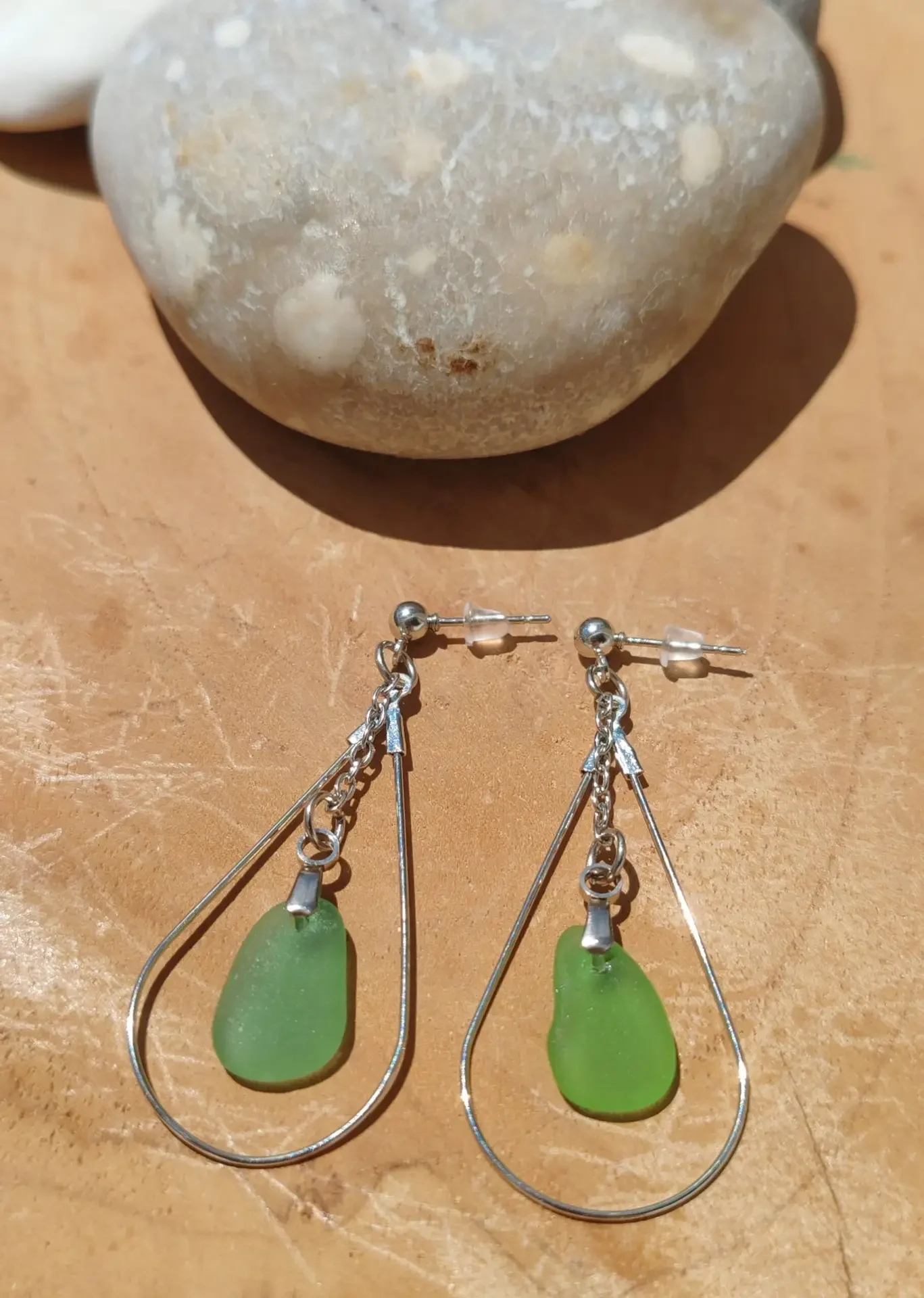
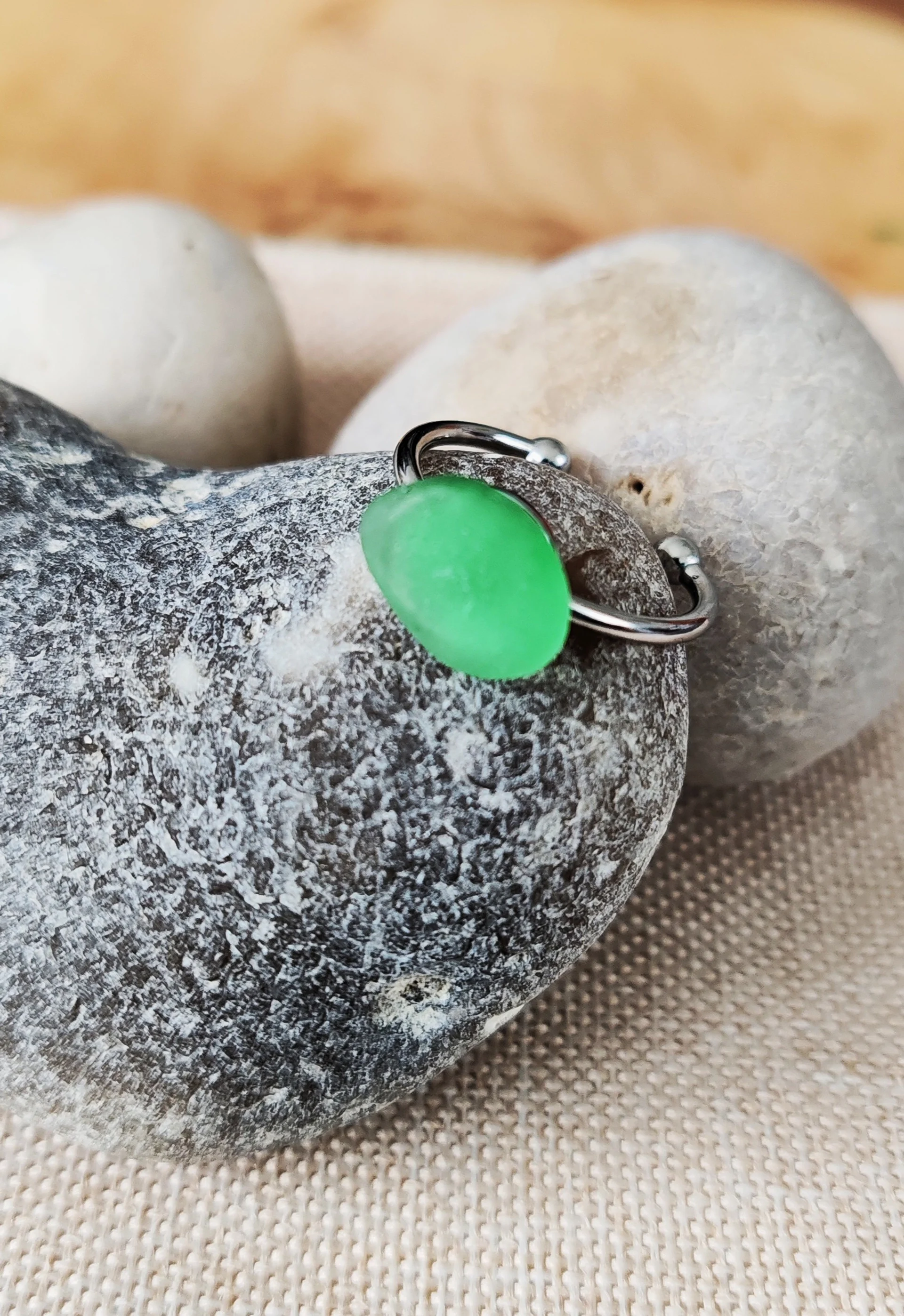
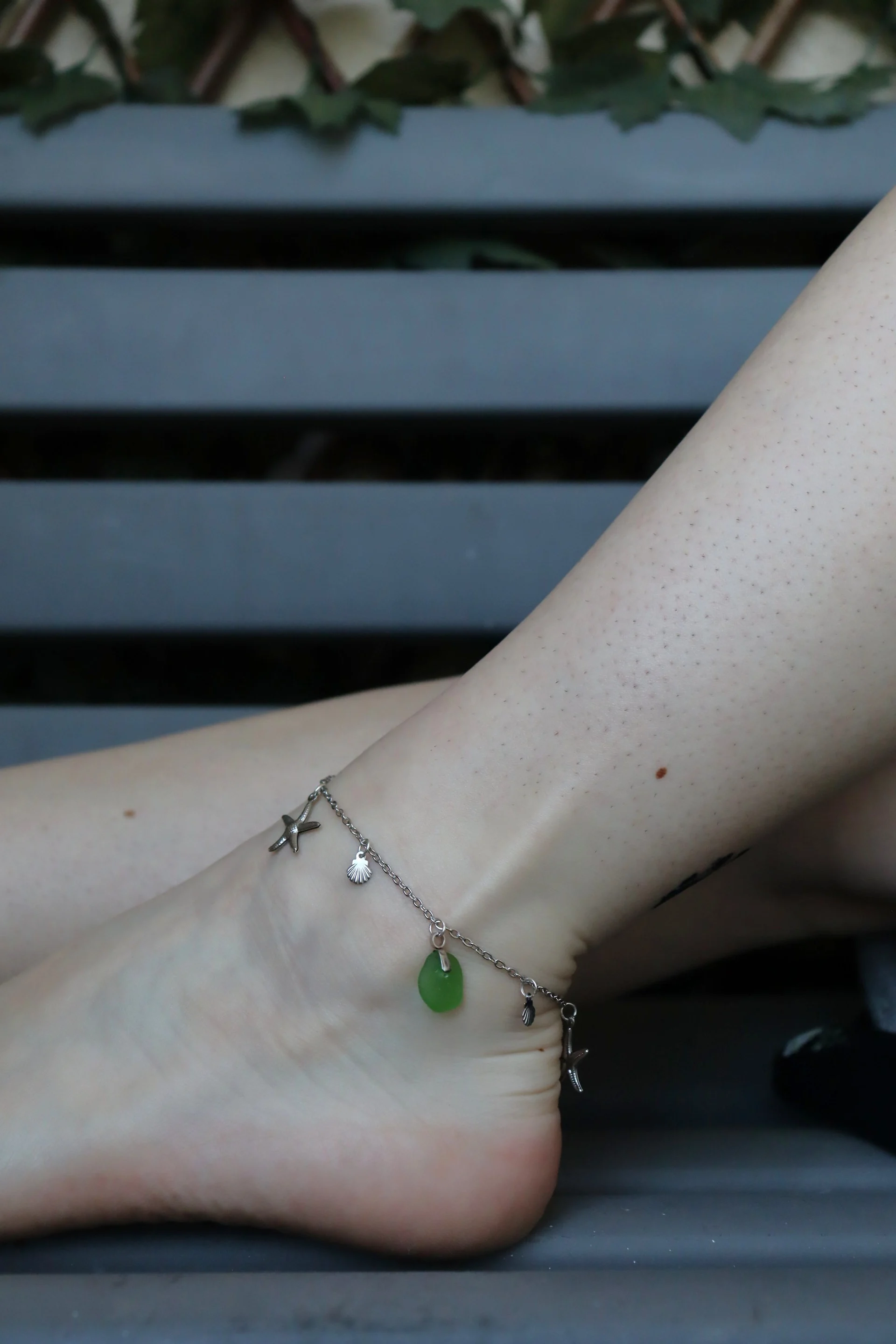
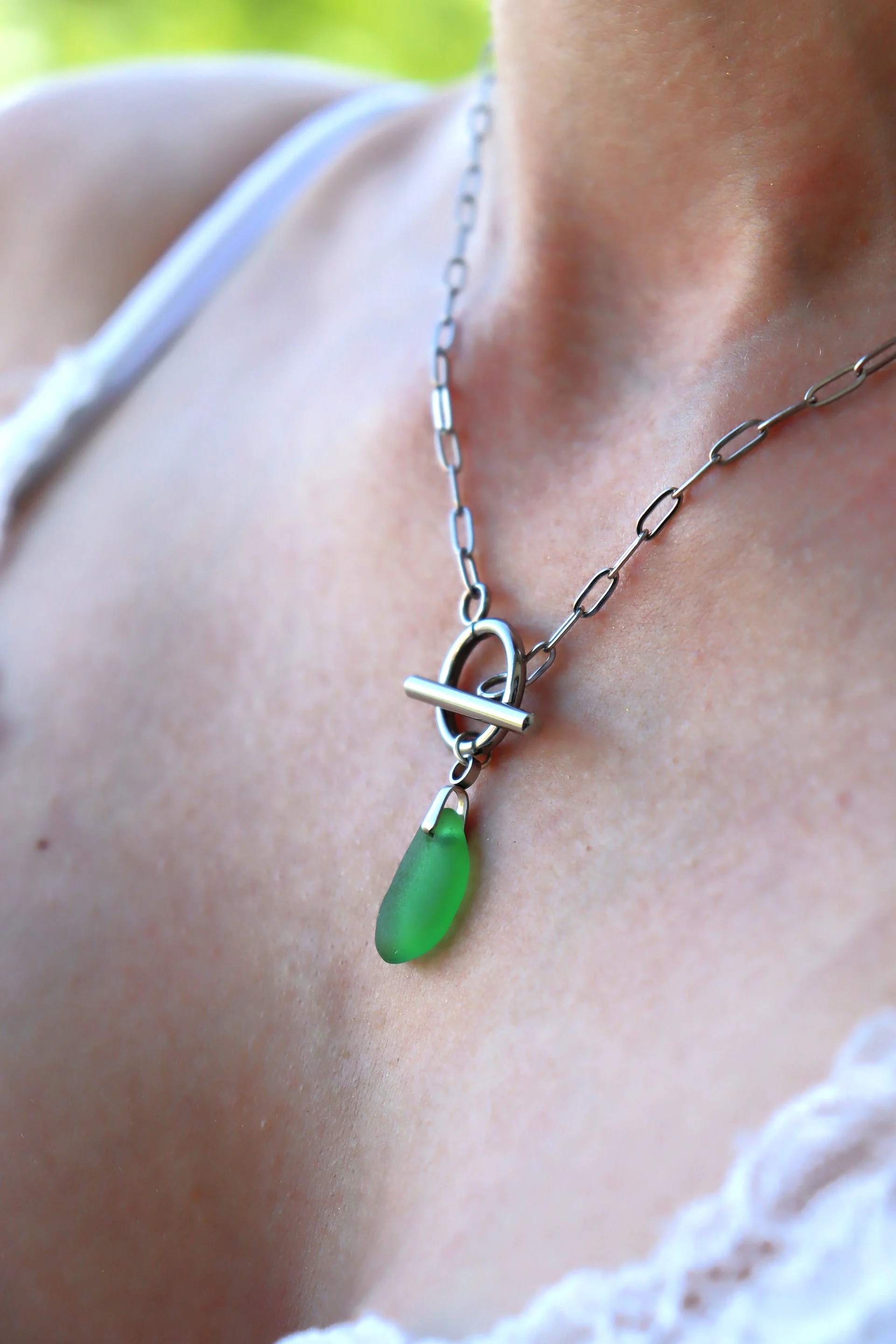
Wine, beer and lemonade bottles: green was everywhere, and on the sand it comes in a thousand nuances, from deep bottle green to an almost translucent pale green. It is also the most frequent shade in our collection, in the form of a soft, luminous moss green, as on the Malama ring with its green sea glass heart.
Frosted white and clear
Coming from colourless glass (jars, preserving pots, bottles, drinking glasses), these pieces take on a milky white veil in the sea, sometimes so dense that you would think they were porcelain. Some keep a slight transparency that we simply call clear. They go with everything and bring a luminous touch, like the gold Celestún necklace and its frosted sea glass.
Caramel brown
Brown comes mainly from beer bottles and certain flasks. Rolled by the sea, it takes on warm caramel or honey tones, beautiful in the light. It is a common colour on beaches, but it is more discreet in jewellery, which gives it a particular charm.
Less common colours
Between the ordinary and the exceptional, some shades turn up regularly without ever being plentiful:
- seafoam or pale green, very light, often from old bottles and old window glass;
- amber and dark olive, shades halfway between green and brown;
- lagoon blue or aqua, particularly soft, which you will find in some of our pieces;
- pale lavender, which comes from certain old types of glass.
The rarest sea glass colours
Rare shades come from objects made in smaller quantities, or from glass whose colour required costly ingredients.
Cobalt blue
This intense blue recalls old pharmacy, perfume or ink bottles. It remains uncommon and is among beachcombers' favourite finds. Its saturation holds up well under the frosting, which makes it very luminous once wet.
Turquoise, yellow, red and orange
These are the most sought-after colours. They often came from decorative objects, or coloured tableware, produced in small quantities. Finding a piece is a matter of luck, and many enthusiasts gather sea glass for years without ever coming across red.
Apparent black
Some pieces look black at first sight. Held up to a bright light, they often reveal a very dark green or brown: these are usually fragments of old bottles made of thick glass, now rare on the sand.
A word of advice: if a shop offers these rare shades in abundance, all alike, be careful. Our article on how to recognise genuine sea glass gives you the useful pointers.
How to choose the colour of your sea glass jewellery?
Rarity is not the only criterion. A shade is chosen above all for what it inspires in you and for the way it suits your skin and your outfits.
Moss green evokes seaweed-covered rocks and pairs well with natural tones, linen and white. Frosted white and clear, luminous and understated, can be worn every day without ever tiring of them. Lagoon blue brings a touch of summer, and caramel brown warms golden skin tones as well as autumn outfits.
The finish of the setting matters too. Our stainless steel settings come in a silver or gold finish: silver highlights the freshness of greens and blues, gold warms green and clear glass. You can compare the shades in our necklaces and pendants, or browse the whole shop to see each piece of glass just as it is.
Frequently asked questions
What is the rarest sea glass colour?
Red, orange and yellow are generally considered the rarest, followed by turquoise and cobalt blue. These colours came from objects made in small quantities or from glass that was costly to colour. Their rarity varies from beach to beach, however, because each shoreline keeps the memory of the objects that were abandoned or lost there over time.
Why is green sea glass so common?
Because green was for a long time the colour of the most widespread bottles: wine, beer and fizzy drinks. These bottles were produced in huge quantities, and some ended up in the sea, broken and then rolled by the waves. Green then comes in many nuances, from bottle green to moss green, depending on the original glass and the wear.
Does the colour of sea glass change over time?
The colour of the glass itself stays stable. What changes is its appearance: a piece looks lighter and more frosted when dry, more intense when wet. To keep your jewellery looking its best, wipe it with a soft, dry cloth, avoid perfume and creams on contact and store it separately, away from moisture.