Sea glass, a fragment shaped by the waves
Where sea glass comes from, why it feels soft and frosted, and what its colours tell: the material at the heart of every Éclat d’océan piece.
3 min read
On a beach, you sometimes have to look down for a long time before you see it. A pale green fragment between two pebbles, a piece as white as frost, more rarely a touch of blue. Sea glass does not sparkle: it glows softly. This material, born from an ordinary object and transformed by the ocean, is what gives every Éclat d’océan piece its soul.
What sea glass is
Sea glass begins its life as a simple piece of glass: a bottle, a flask, a jar. One day, that fragment reaches the sea. What could have stayed a piece of debris becomes something else, as long as time is allowed to do its work.
Because the transformation cannot be ordered. It happens to the rhythm of tides, storms and seasons. The glass rolls, knocks against sand and pebbles, leaves with the backwash and returns to the shore. Little by little, its sharp edges round off and its surface loses its shine, taking on the matte, velvety look that makes it so recognisable.
The patient work of the sea
It takes years for a shard of glass to become sea glass, and often much longer. Sand acts as a very fine abrasive, salt water works the surface, and the waves do the rest. The result is a piece that is soft to the touch and frosted, catching the light without ever dazzling.
This is also why every fragment is unique. Two pieces from the same bottle will have neither the same shape nor the same grain once the sea gives them back: one will have spent longer in the sand, the other will have been rolled by rougher water. Nature signs every piece, and no signature looks like another.
A colour, a story
Sea glass comes in a palette of delicate shades: moss green, frosted white, lagoon blue, caramel brown. Each hue keeps the memory of the object it came from. Greens and browns recall everyday bottles, white often comes from clear glass turned milky over time, while deep blue is far rarer to find on the sand.
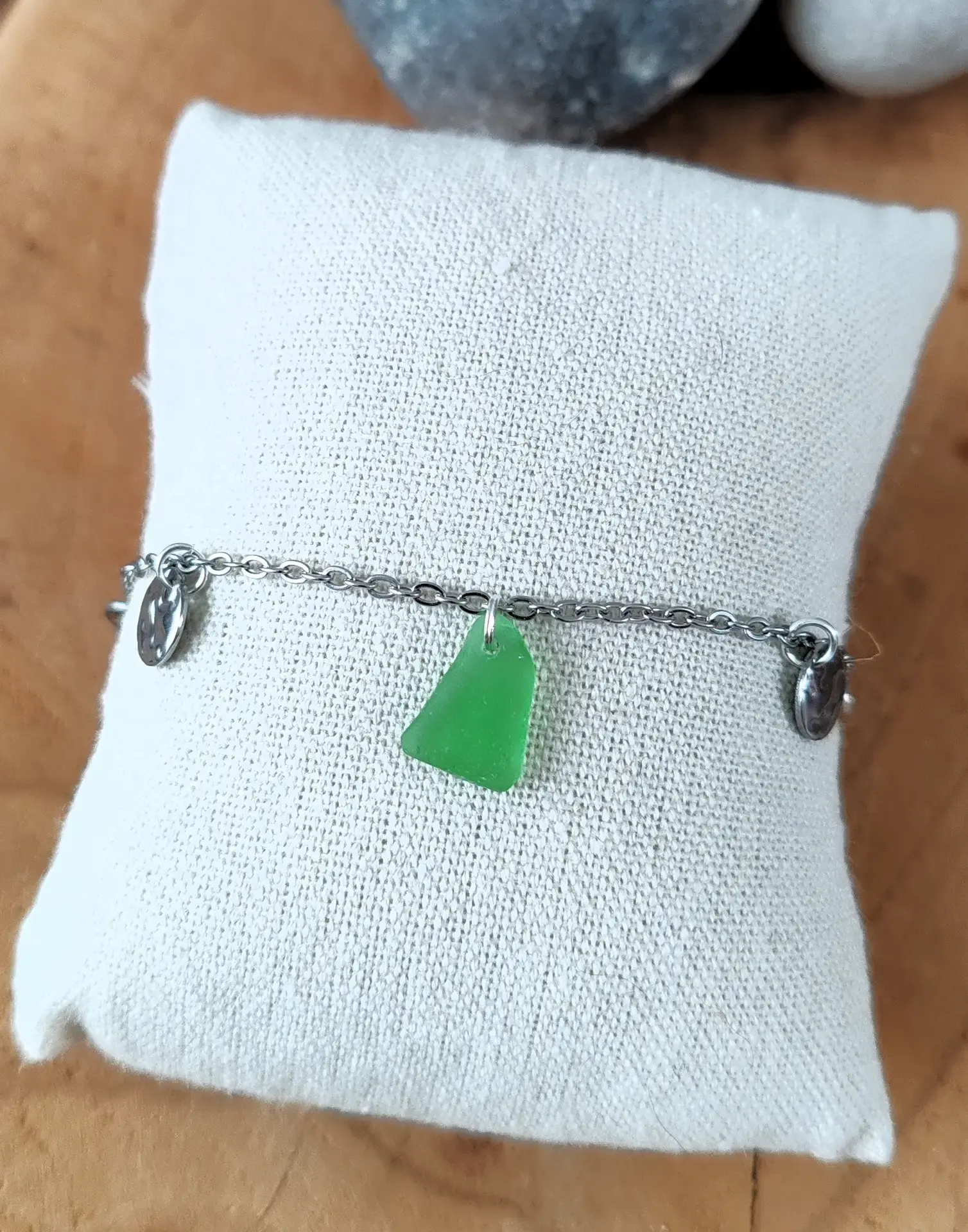
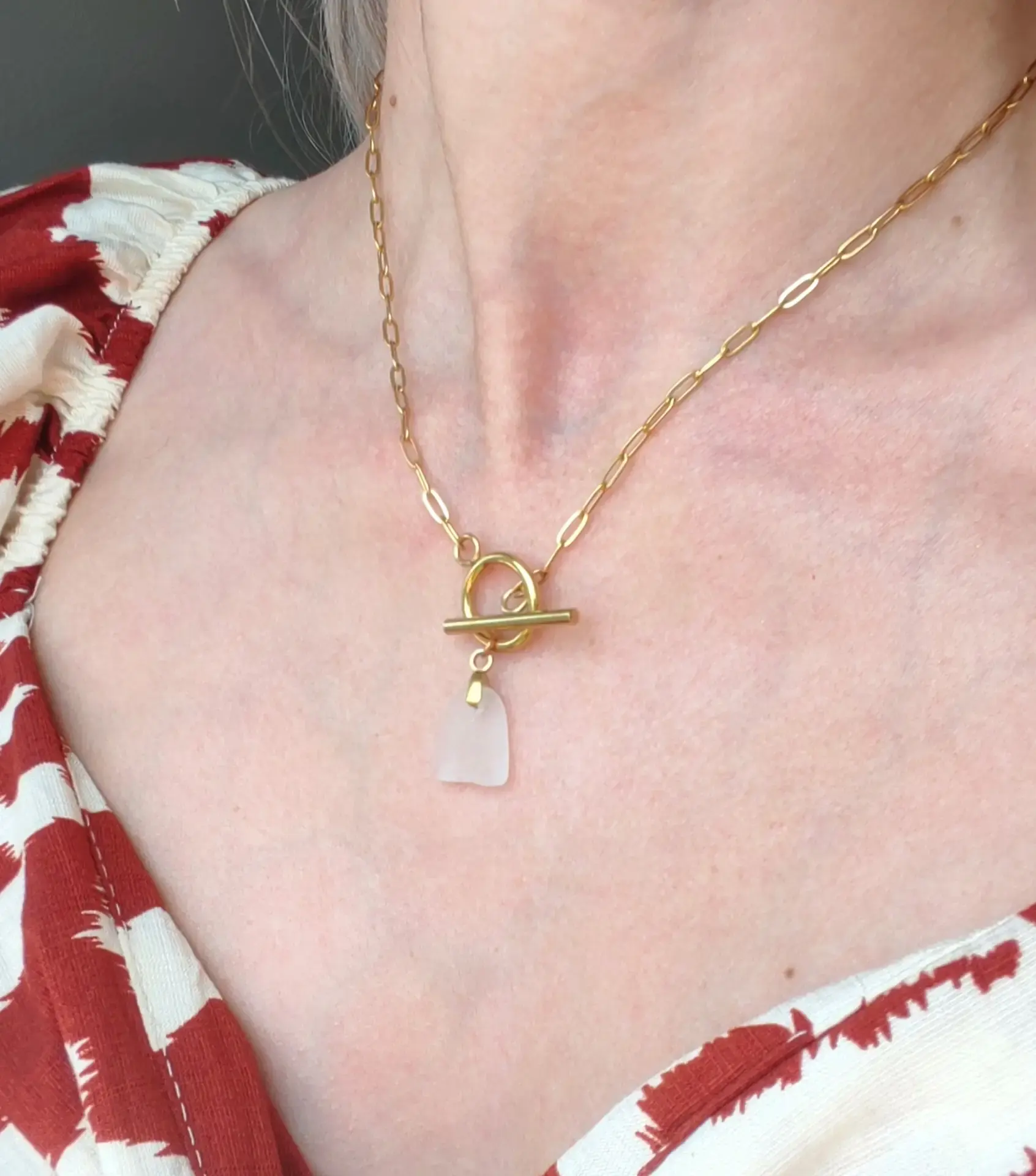
In our creations, green is the colour that comes back most often, from a soft, almost transparent green to an intense one. It sits naturally with silver-tone steel as well as with the warmth of gold, and a single fragment is enough to give a piece all its freshness.
Chosen as the sea left it
Every fragment we use is collected by hand on beaches, then chosen for its shape, its colour and its authenticity. No piece is recut or altered: we keep the fragment exactly as the sea shaped it, with no artificial polishing. This choice is what makes each piece singular, and it is why the jewel you receive may differ slightly from the photo, by a shade or an outline.
To learn more about how we choose our materials, the Our materials page describes sea glass and the stainless steel that goes with it.
Wearing a fragment of the ocean
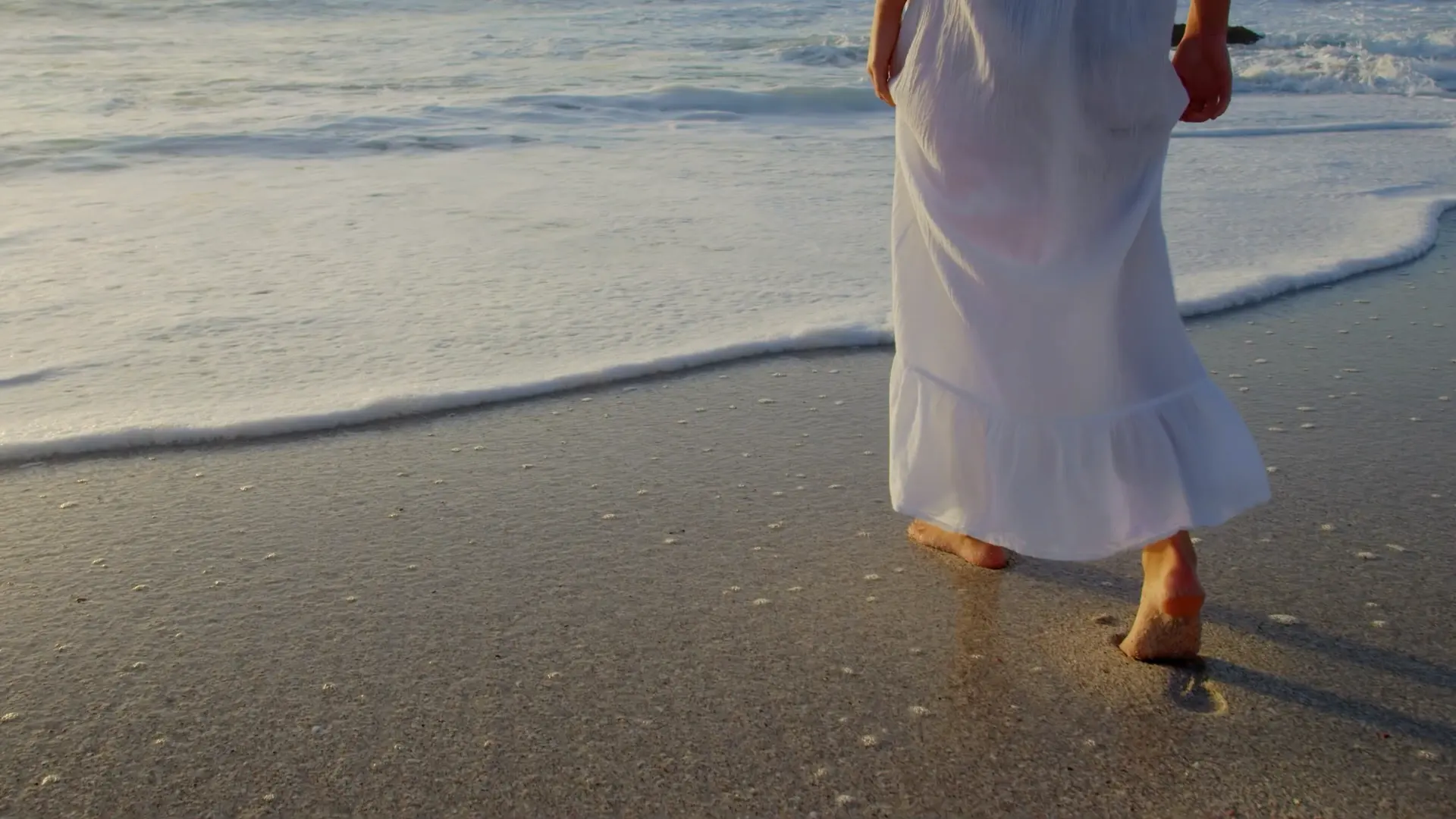
Wearing sea glass means wearing an object that has travelled. A fragment that was ordinary, then forgotten, then slowly transformed until it became precious. Many see it as a symbol of transformation and gentleness, a way to keep a little of the sea close, with its shores and its walks.
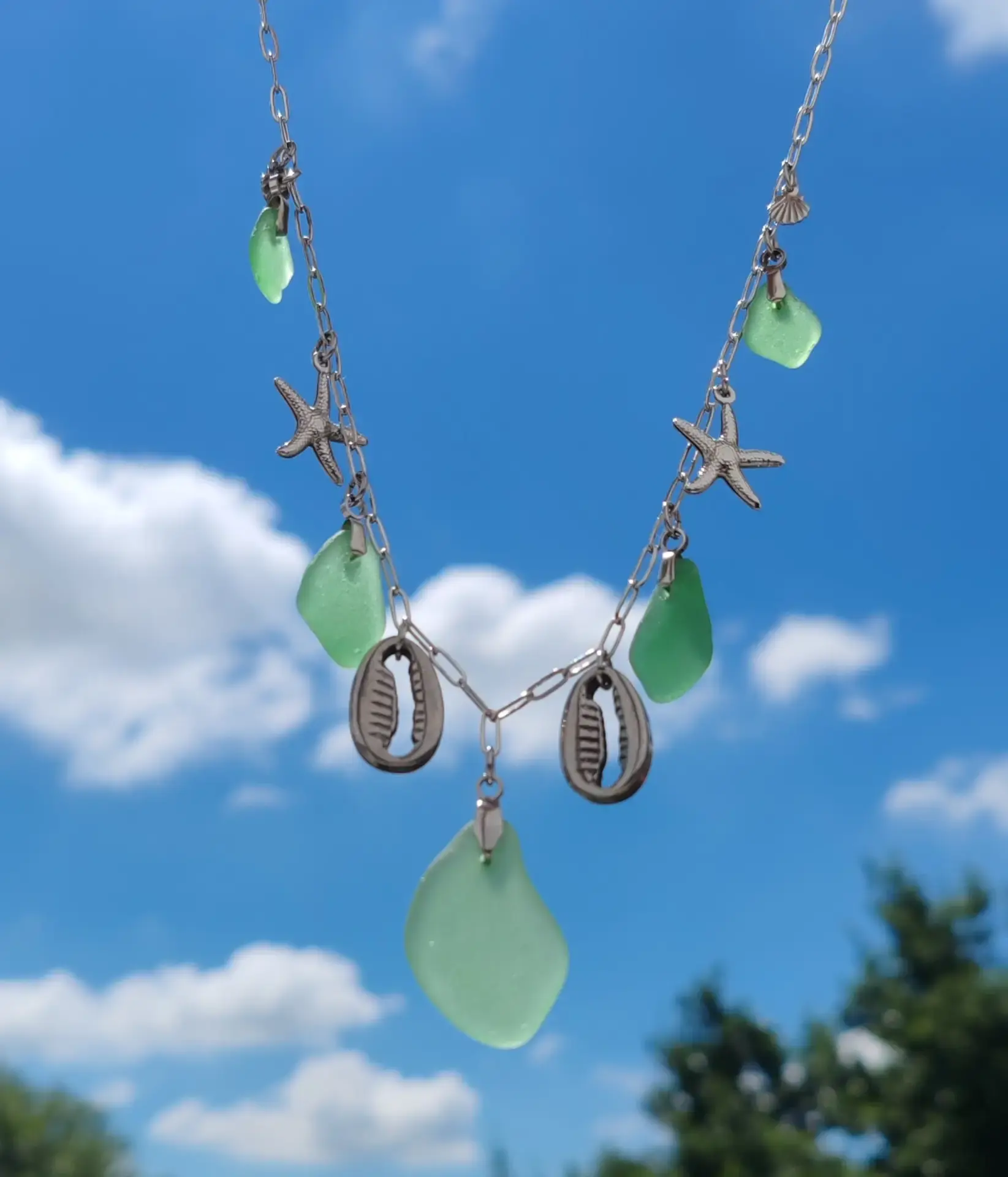
The Rivage necklace is a fine example: real pieces of green sea glass sit alongside starfish, cowries and small shells, like a walk along the water worn around the neck. Each necklace is slightly different, because each fragment is.
Whether you choose a necklace, a ring or a pair of earrings, the principle stays the same: a unique fragment, assembled by hand, for a piece that exists only once.