Recycled sea glass jewellery: when nature recycles glass
Sea glass is glass recycled by nature, with no melting and no recutting. Why it makes more responsible jewellery, and how to make it last for many years.
5 min read
We talk a lot about recycling, often in grand terms. Sea glass needs no speeches: it is waste that the sea has slowly turned into a small treasure. A forgotten glass object, broken and rolled for decades, that returns to the beach in a new form. Wearing sea glass jewellery therefore means wearing a material that has already had a first life. Here is what that changes, and what it does not.
Sea glass, glass recycled by nature
It all begins with a glass object: a bottle, a jar, a flask, tableware. One day it ends up in the sea, thrown away, lost or broken on the rocks. The waves then roll it against sand and pebbles. They round off its sharp edges, and the chemical action of the water gradually veils its surface. Decades later, the piece returns to the shore, soft and frosted.
This is the very definition of recycling: a worn material made useful and beautiful again. Except that here, no factory is involved. The sea does all the work, with no energy other than that of the tides and the surf. To understand this shaping process better, read our article on sea glass shaped by the waves.
Why sea glass jewellery is more responsible
No piece of jewellery is neutral, and it would be dishonest to claim otherwise. But sea glass has real advantages over other materials:
- it requires no extraction: no mine, no quarry, no deposit to exploit;
- we neither melt it down nor recut it, so it keeps the shape the sea gave it;
- it gives value to former waste instead of creating new material;
- gathering it by hand, in small quantities, requires no machinery;
- each piece is unique, far from the logic of mass production.
At Éclat d'océan, every piece is gathered by hand on the beaches, with respect for the environment. We never recut it: the setting adapts to the glass, not the other way round. This choice takes more time, but it respects the work of the sea all the way through.
Gathering that respects the shore
A material recycled by nature only makes sense if it is gathered with care. Collecting sea glass means gathering in moderation, respecting local rules and protected areas, not damaging the dunes and not disturbing wildlife. It also often means leaving with a little litter picked up along the way.
It is also worth remembering that sea glass is becoming rarer. Far less glass is thrown into the sea today than in the past, which is excellent news for the oceans, and well-frosted pieces take decades to form. Each piece gathered therefore deserves to be shown off, rather than forgotten at the back of a drawer.
If you enjoy searching yourself, our article on where to find sea glass details the right habits and the right moments to do so.
Stainless steel, a metal made to last
Responsible jewellery is also jewellery you keep for a long time. Our settings are made of stainless steel, with a silver or gold finish. It is a sturdy metal that copes well with everyday life and can be recycled, which makes it a fitting companion for a piece of glass that has already travelled through decades.
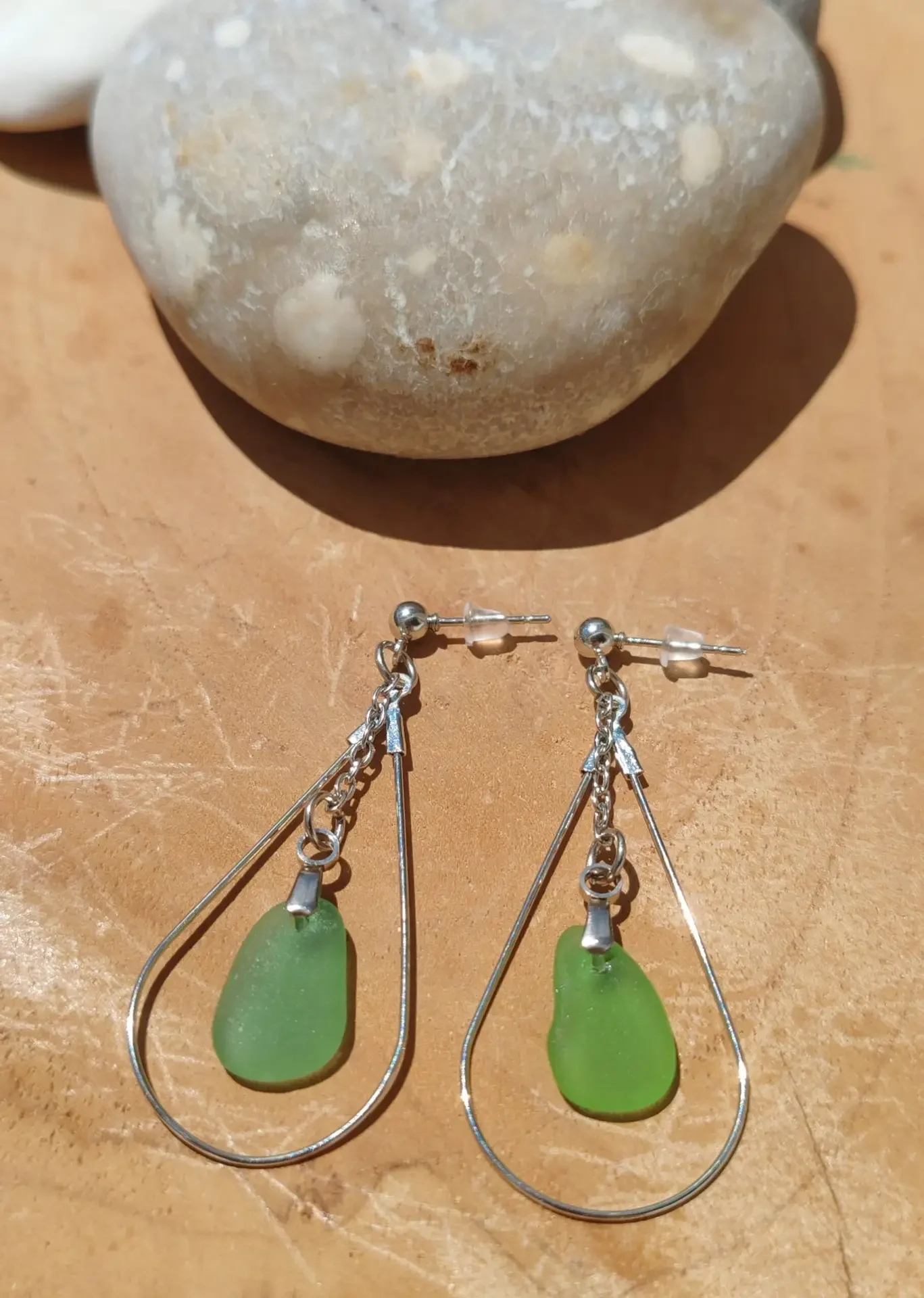
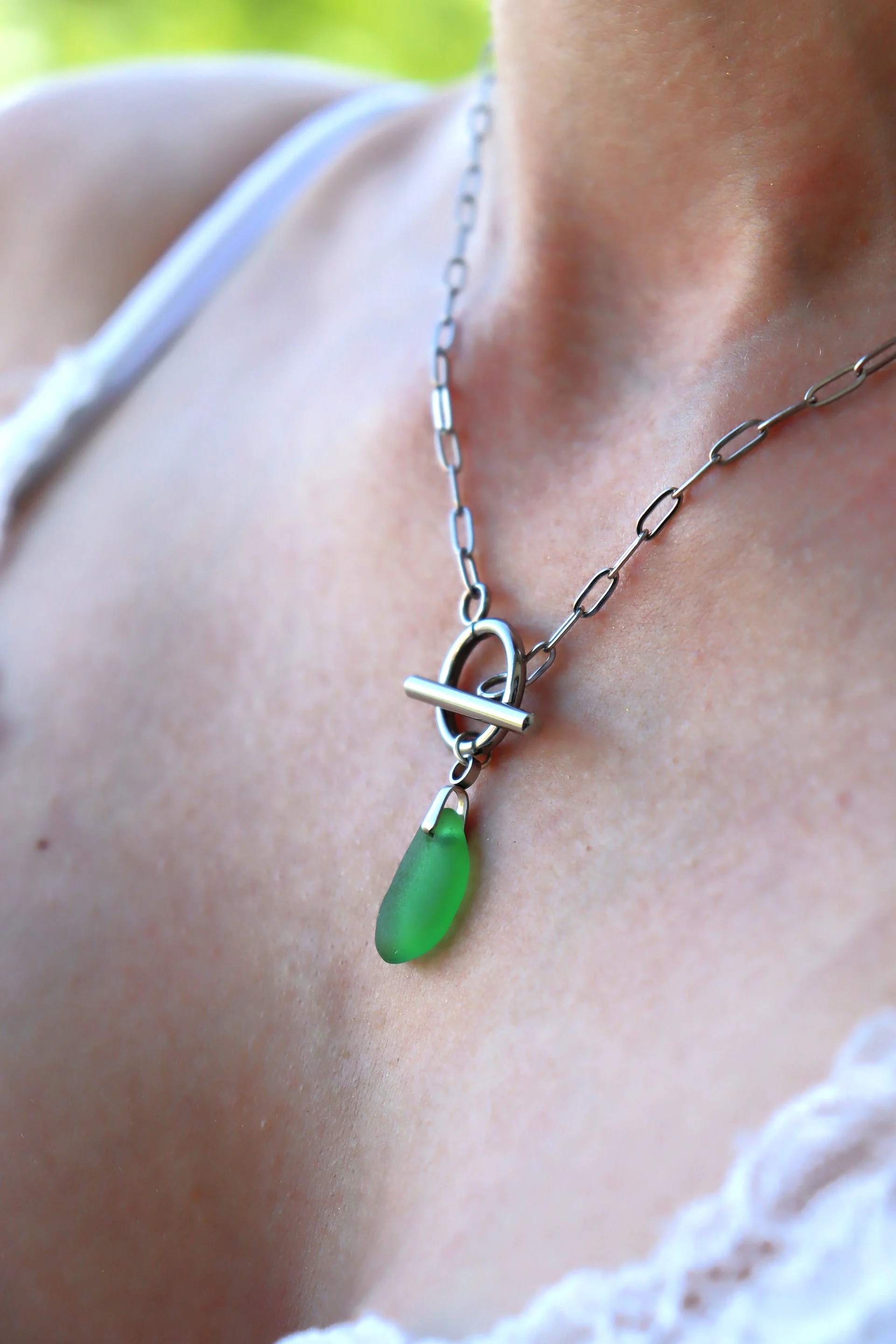
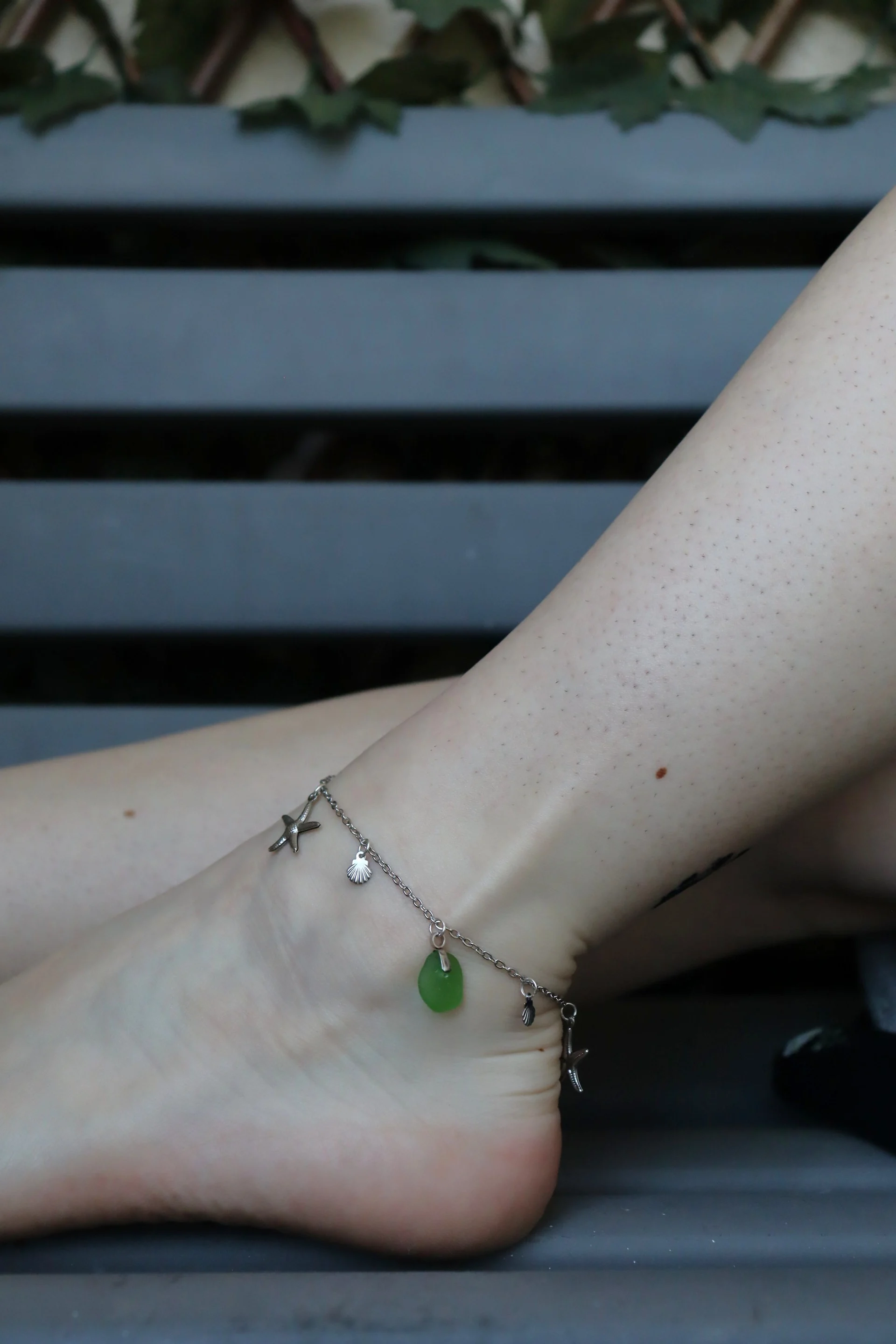
The Rivage necklace illustrates this pairing well: its stainless steel chain combines several green sea glass pieces, cowrie shells, starfish and seashells. The more minimal Éole earrings pair steel with a single piece of green sea glass. Our materials page explains our choices in more detail.
Making your sea glass jewellery last
The most responsible gesture is still to look after what you own. A few habits are enough to keep jewellery beautiful for years.
Avoid contact with perfume, creams and chemicals. Take your jewellery off for sport and for sleeping. After contact with water, wipe it with a soft, dry cloth, then store it separately, away from moisture, to avoid pieces rubbing together. For swimming, it is better to take it off. Our article on caring for stainless steel and sea glass brings all this advice together.
You will find our designs among our sea glass earrings and throughout the shop. Every order is carefully packed in a jewellery box, ready to give, and delivery is free in France on orders of 79 € or more.
Frequently asked questions
Is sea glass really recycled glass?
Yes, quite literally: it is glass that has already been used, as bottles, jars or tableware, then transformed by the sea over decades. It does not go through a recycling plant, but it is genuinely reused instead of being replaced by new material. That is why sea glass is often described as glass recycled by nature.
Is sea glass jewellery eco-friendly?
No piece of jewellery has zero impact, and we prefer to speak of more responsible jewellery. Sea glass requires no extraction, it is neither melted down nor recut, and it gives value to former waste. Combined with a sturdy, well-cared-for stainless steel setting, it can last for many years, which remains the best way to consume less.
Is the sea glass in your jewellery altered?
No. Each piece is gathered by hand on the beaches, with respect for the environment, then set as it is. It is never recut or altered, and its shape is the one the sea gave it. That is why each of our handmade pieces of jewellery is one of a kind, slightly different from all the others, even within the same design.