Genuine sea glass: how to recognise it at first glance
Uneven frosting, tiny crescent marks, one-of-a-kind shapes: the simple clues that set genuine sea glass apart from glass frosted in a workshop.
5 min read
A shard of glass resting on the sand, soft under your fingers, veiled like a misty morning: sea glass has a quiet charm that makes us pick it up without thinking. Its popularity has a downside, though. A great deal of artificially frosted glass, tumbled for a few days in a machine or etched with acid, is now sold under the same name. To a hurried eye, the difference is slight. With a few pointers, it becomes obvious.
What is genuine sea glass?
Genuine sea glass is a piece of glass (a bottle, a jar, tableware, a flask) that has spent many years in the waves. The surf rolls it against sand and pebbles, rounds its edges and wears down its surface. Seawater also acts chemically on the glass, which slowly gives it that distinctive frosted look. This takes decades: it is time, not a machine, that makes sea glass.
To understand this slow shaping process better, read our article on sea glass shaped by the waves. Remember the essentials: a genuine piece carries the trace of its history, and that history can be read on its surface.
How can you tell genuine sea glass from frosted glass?
No single clue is absolute proof. It is the combination that should convince you. Hold the piece in natural light and look at it unhurriedly.
Uneven frosting, never uniform
Glass frosted in a tumbler or with acid has a perfectly even matte finish, like a bathroom window. Genuine sea glass has nuanced frosting: denser in some places, lighter in others, sometimes almost clear on one side. This variation comes from the knocks and friction it has received over the years, never the same from one side to the other.
Tiny crescent-shaped marks
Bring the piece close to your eyes or use a magnifying glass. Authentic sea glass often bears tiny crescent or C-shaped marks, created by impacts against pebbles and sand. Collectors see them as one of the most reliable signs. Glass tumbled for a few days in a workshop has not had time to be marked in this way.
Soft but imperfect shapes
The sea rounds without evening out. A genuine piece has softened edges, yet its outline remains irregular: a sharper angle here, a varying thickness there, sometimes the curve of a bottle neck or a trace of moulded relief. Artificial pieces are often too similar to one another, with edges that are still sharp or, on the contrary, outlines that are too perfect.
Colours consistent with their origin
Green, white and brown naturally dominate, because they come from the most common bottles. Rare shades such as cobalt blue, red or yellow do exist but remain exceptional. A whole batch of bright turquoise or candy pink glass, all in identical shades, should make you wary. We cover this topic in our article on sea glass colours and their rarity.
A feel that tells a story
Under the finger, acid-etched glass often feels silky and uniform, almost soapy. Genuine sea glass has a livelier feel: soft, but with slight roughness, small pits and a texture that changes depending on where you run your fingertip.
The signs that should alert you
Before buying a piece of jewellery described as sea glass, a few signals deserve a question to the seller:
- pieces that are all identical, in shape and colour, offered in large quantities;
- a perfectly uniform matte finish, with no nuance or marks at all;
- bright, rare colours available in abundance;
- geometric shapes that are too regular (perfect hearts, calibrated rounds);
- no information whatsoever about where the glass comes from.
Machine-polished glass is not a flaw in itself, and it can make lovely objects. It is simply a different material, which should be presented as such.
Why genuine sea glass makes unique jewellery
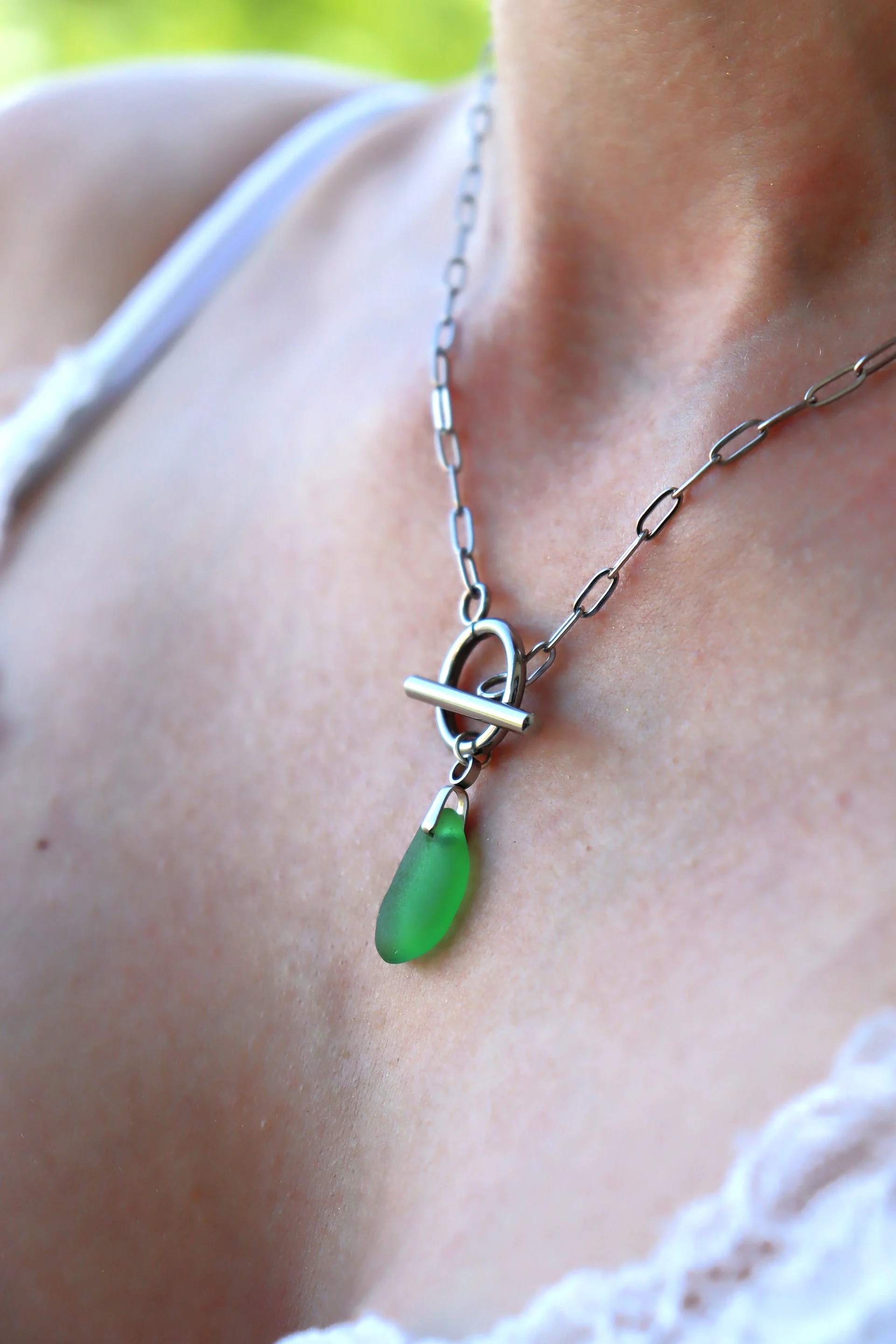
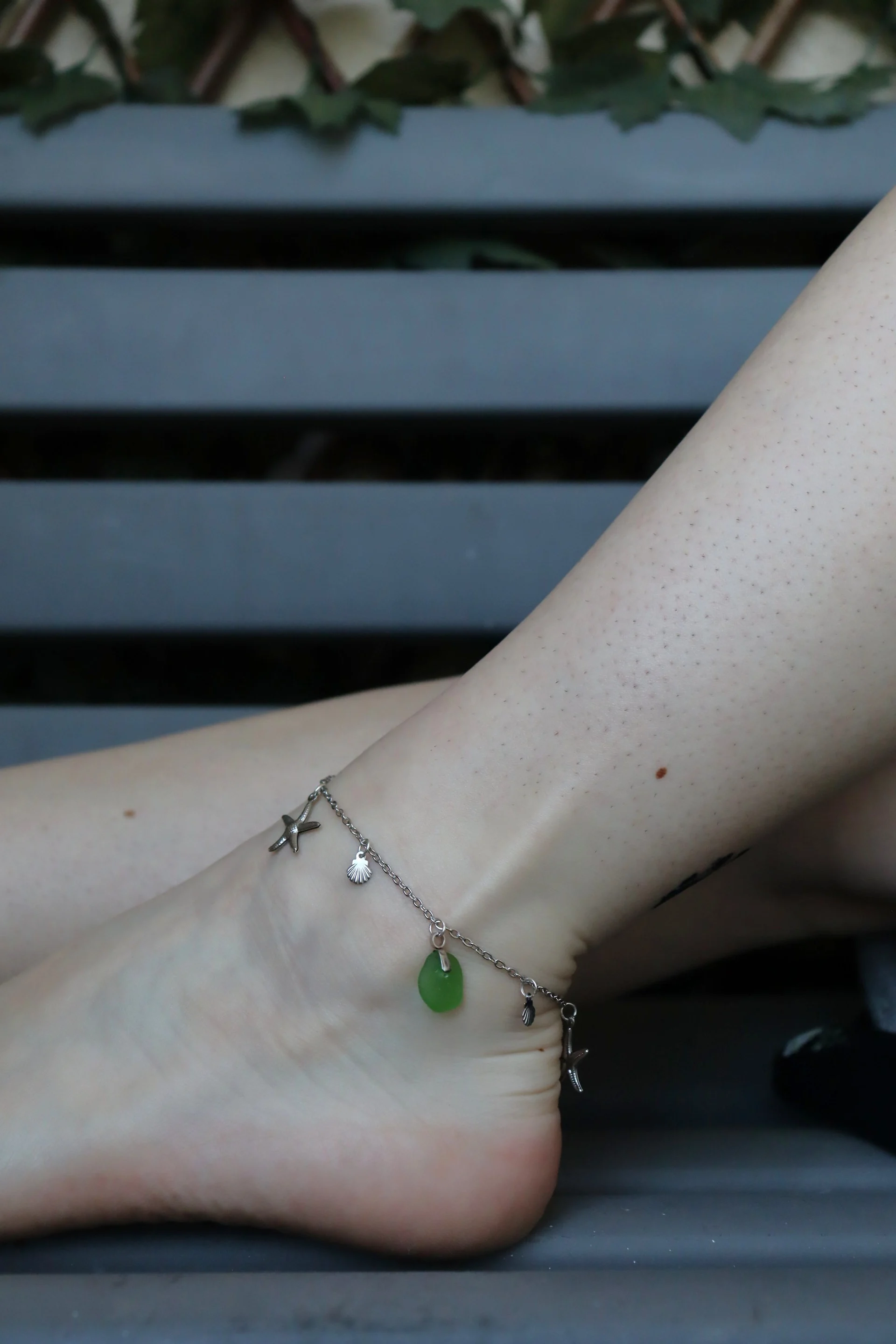
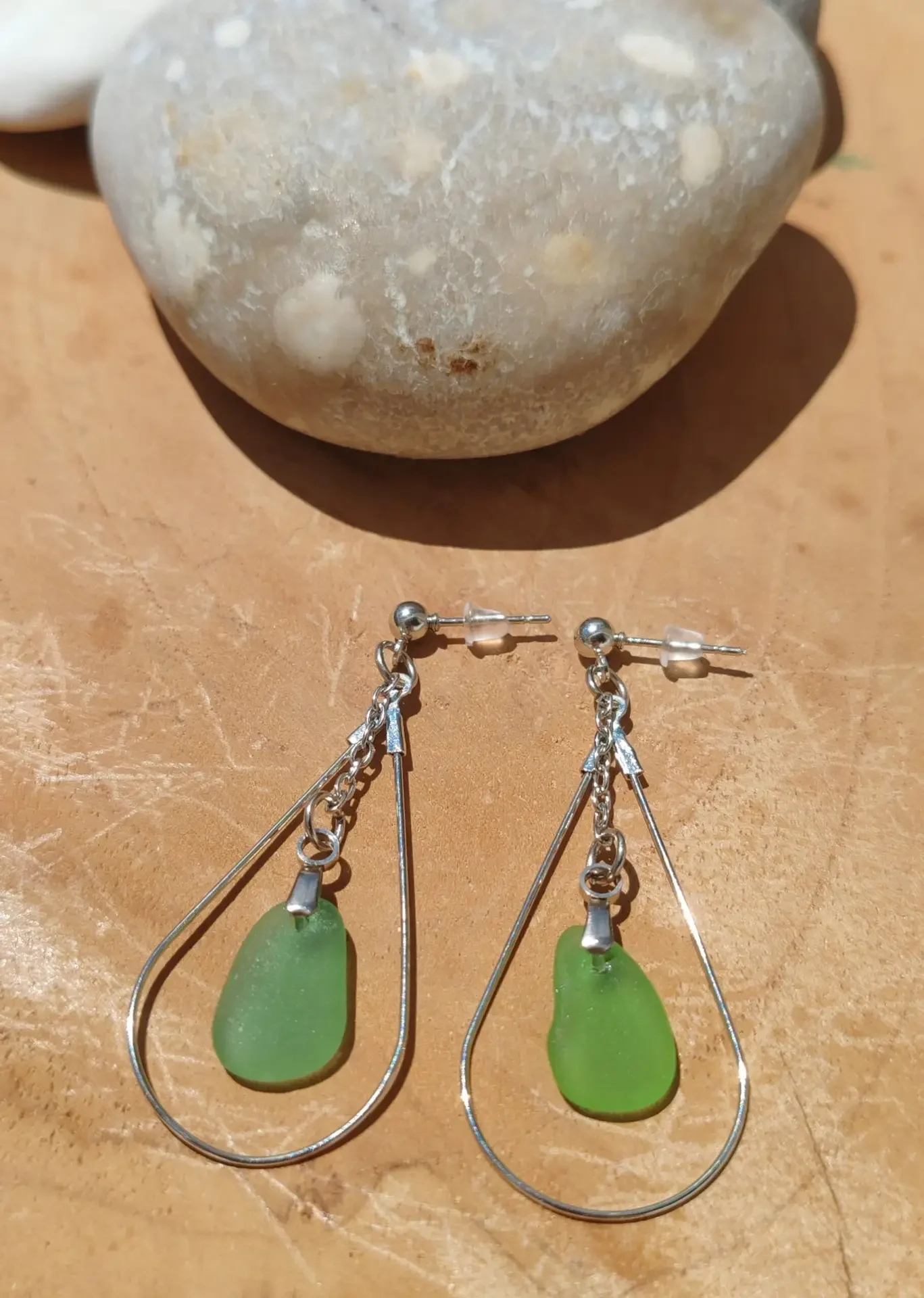
Because no two pieces are alike, jewellery made with genuine sea glass is necessarily one of a kind. At Éclat d'océan, every piece is gathered by hand on the beaches, with respect for the environment. It is never recut or altered: the shape you wear is the one the sea gave it. The jewellery adapts to the glass, not the other way round.
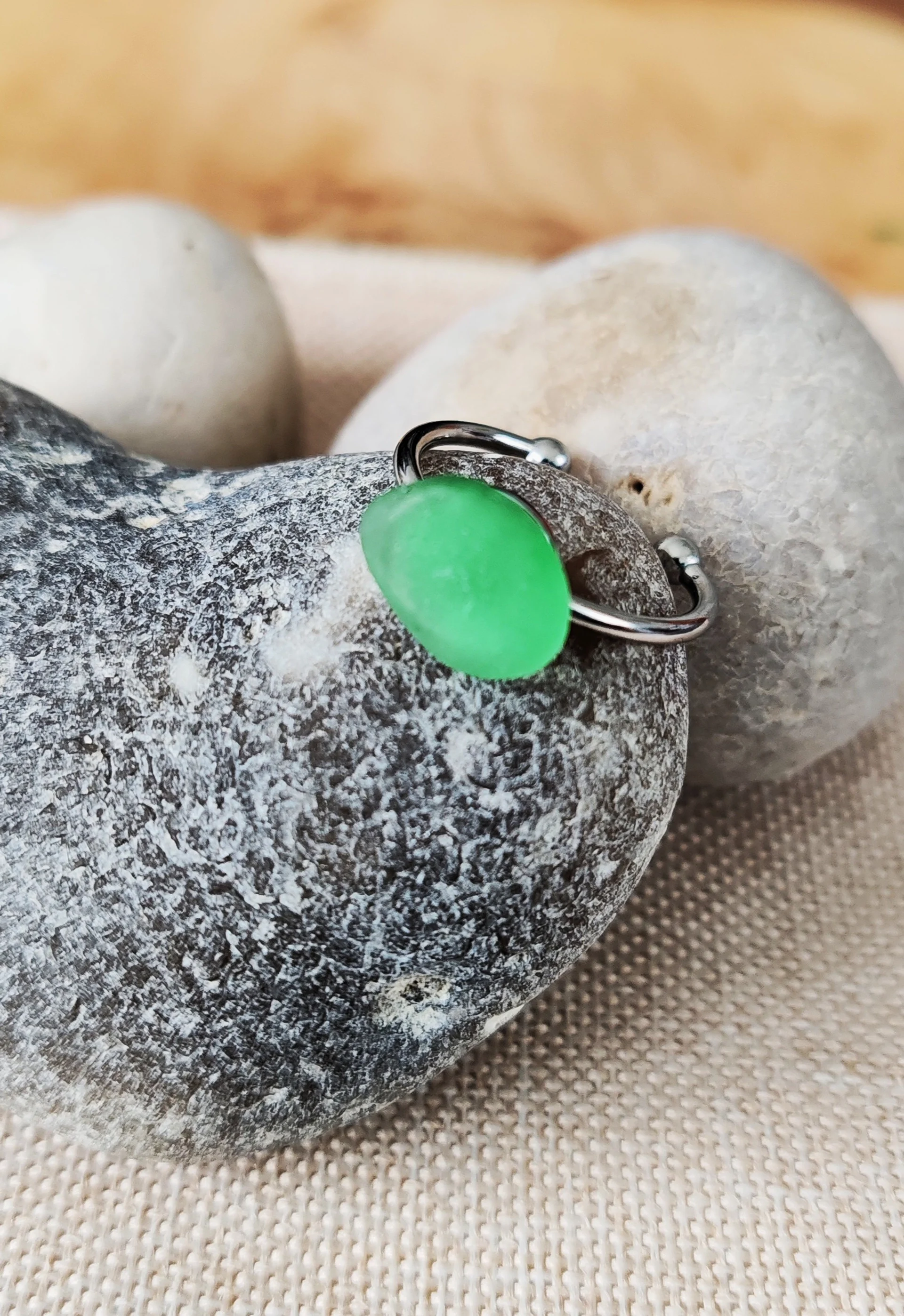
This choice explains the variety of our designs, from our sea glass rings to our necklaces and pendants. On the silver Vanikoro ring, for instance, the open setting reveals the green sea glass pebble just as it was found. The settings are made of stainless steel, with a silver or gold finish, to bring out the colour of the glass without hiding it.
To find out more about what we pair with the glass, our materials page explains our choices in detail, and the shop brings together every piece available.
Frequently asked questions
Is genuine sea glass always frosted?
Almost always, but not uniformly. The frosting comes from friction against sand and the chemical action of water over many years. Depending on how long it spent in the sea and the type of beach, a piece may be very opaque or keep some clearer areas. A matte finish that is too regular, identical on every side, is rather a sign of artificial frosting.
Can you recognise genuine sea glass in a photo?
It is harder than in your hand, but a good photo in natural light already helps a lot. Look at the nuances of the frosting, the regularity of the shapes and the consistency of the colours. If every piece in a shop looks as though it came from the same mould, ask the seller. A maker who works with genuine sea glass can tell you where it comes from.
Is the sea glass in your jewellery altered?
No. Each piece is gathered by hand on the beaches, then set as it is, without being recut or altered. Its shape, its shades and its small marks are the ones the sea gave it. That is why each of our pieces of jewellery is one of a kind, slightly different from the product photo, with a piece of glass that exists only once.